How Vietnamese Durian Is Processed for Export
01/06/2026 | Tác giả: Admin
Vietnam has become one of the world's leading durian exporters, supplying fresh durian to markets such as China and other international destinations. To meet export requirements and maintain fruit quality during transportation, durian must go through a carefully managed processing process.
In this article, we explain how Vietnamese durian is processed for export, from harvesting in orchards to shipment overseas.
Why Proper Durian Processing Matters
Durian is a highly perishable fruit. Improper handling can lead to:
-
Premature ripening
-
Physical damage
-
Quality deterioration
-
Rejection by importers
For this reason, exporters follow strict procedures to ensure the fruit arrives in good condition and complies with importing country regulations.
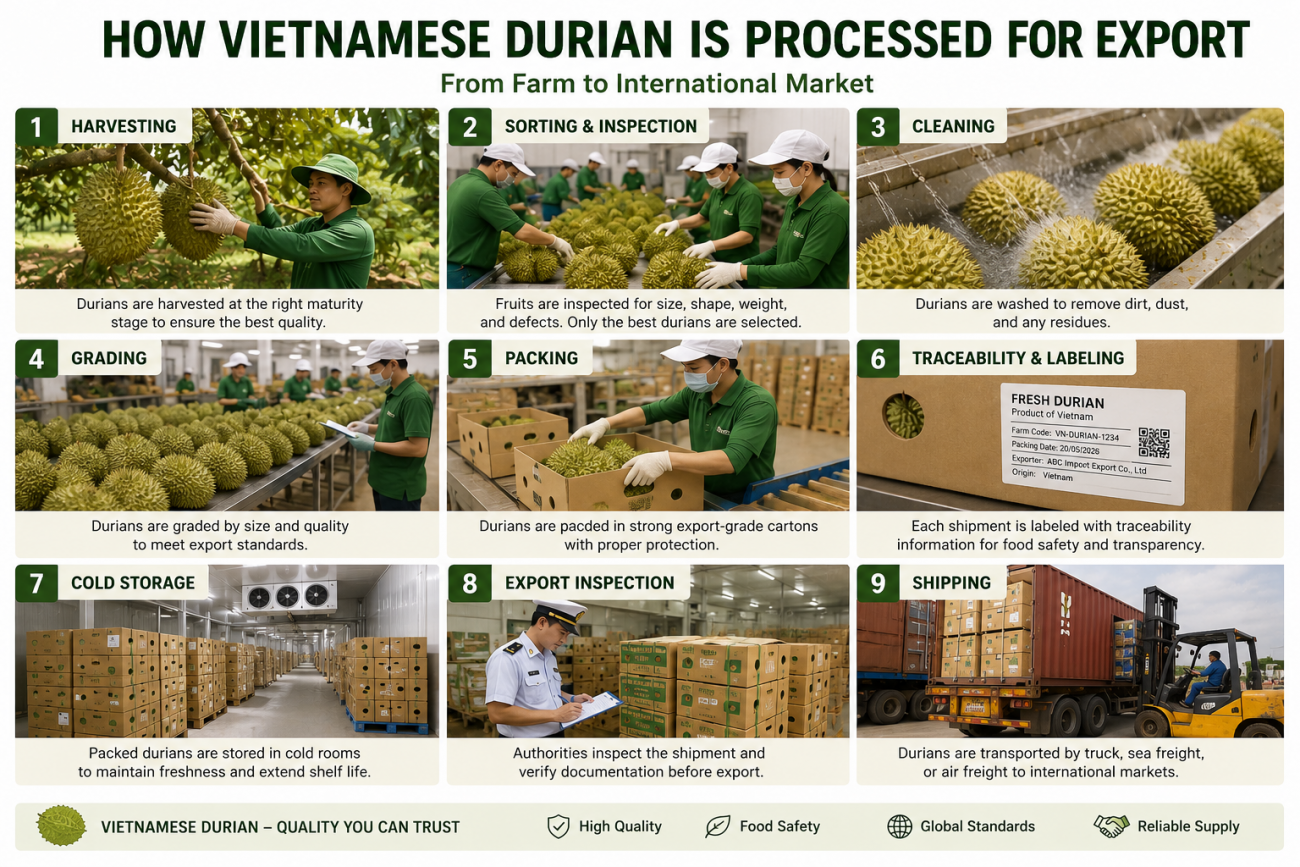
Step 1: Harvesting at the Right Maturity Stage
The export process begins in the orchard.
Farmers harvest durians when they reach the maturity level required by buyers and importing markets. Harvesting too early can affect taste and texture, while harvesting too late may reduce shelf life.
Popular export varieties include:
-
Ri6 Durian
-
Monthong Durian
-
Dona Durian
After harvesting, the fruits are transported from farms to collection centers or packing facilities.
Step 2: Initial Inspection and Sorting
Upon arrival at the processing facility, durians undergo an initial inspection.
Workers check:
-
Fruit size
-
Shape
-
Weight
-
External appearance
-
Pest or disease damage
Damaged or defective fruits are removed.
The remaining fruits are sorted into different categories according to customer requirements.
Step 3: Cleaning and Surface Preparation
Before packaging, durians are cleaned to remove:
-
Dirt
-
Dust
-
Plant debris
Cleaning helps improve appearance and reduces contamination risks during transportation.
Some facilities also perform additional sanitation procedures depending on export market requirements.
Step 4: Grading by Size and Quality
Export buyers often require consistent fruit sizes.
Durians may be classified into categories such as:
-
Small
-
Medium
-
Large
Additional quality standards may include:
-
Minimum fruit weight
-
Uniform appearance
-
Absence of defects
-
Acceptable stem condition
Proper grading helps exporters meet buyer specifications and maintain product consistency.
Step 5: Packing for Export
Packaging plays a critical role in protecting durian during transportation.
Common packing methods include:
Carton Boxes
Fresh durians are often packed in strong export-grade cartons designed to withstand handling during shipment.
Protective Materials
Foam nets, paper separators, or other protective materials may be used to reduce impact damage.
Product Labeling
Each package may contain information such as:
-
Product name
-
Origin
-
Exporter details
-
Traceability codes
-
Packing date
Step 6: Traceability and Documentation
Modern export markets require product traceability.
Exporters typically maintain records covering:
-
Farm identification
-
Growing area codes
-
Packing facility codes
-
Processing dates
Traceability systems help importing authorities verify product origin and food safety compliance.
Step 7: Cold Storage and Temperature Control
Fresh durian quality can decline rapidly if temperature is not properly controlled.
After packing, fruits are often stored in cold rooms before shipment.
Temperature management helps:
-
Slow ripening
-
Extend shelf life
-
Preserve fruit quality
-
Reduce losses during transport
Maintaining the cold chain is particularly important for long-distance exports.
Step 8: Export Inspection and Customs Procedures
Before shipment, exporters must complete required documentation and inspections.
Depending on the destination market, authorities may verify:
-
Phytosanitary compliance
-
Traceability records
-
Packaging standards
-
Product quality
Only shipments that meet applicable requirements can proceed to export.
Step 9: International Transportation
Fresh durian is commonly transported through:
Road Transport
Often used for cross-border shipments to nearby markets.
Sea Freight
Suitable for large-volume exports.
Air Freight
Used for premium products or urgent deliveries where speed is critical.
The choice of transportation depends on destination, cost, and customer requirements.
Challenges in Durian Export Processing
Despite rapid industry growth, exporters still face several challenges:
-
Maintaining consistent quality
-
Managing cold chain logistics
-
Meeting changing import regulations
-
Reducing post-harvest losses
-
Ensuring traceability compliance
Continuous improvements in processing and logistics are helping Vietnamese exporters remain competitive in global markets.
The Growing Importance of Processing Standards
As international demand for Vietnamese durian increases, processing standards are becoming more important than ever.
Buyers increasingly expect:
-
Consistent quality
-
Reliable traceability
-
Professional packaging
-
Food safety compliance
Exporters that invest in modern processing systems are generally better positioned to serve international markets and build long-term customer relationships.
Conclusion
Vietnamese durian undergoes a multi-step export process that includes harvesting, sorting, cleaning, grading, packing, traceability management, cold storage, and international transportation. Each stage plays an important role in preserving fruit quality and meeting export requirements.
As Vietnam continues to strengthen its position in the global durian market, efficient processing and quality management will remain key factors supporting export growth.
 You may also like:
- Durian Export Requirements from Vietnam (2026 Guide)
- How Durian Is Packed and Shipped from Vietnam
- Durian Harvest Season in Vietnam – When Is Durian Available for Export?
- Vietnam Durian Export Price – Latest Durian Price from Vietnam (2026 Update)
- Durian in Vietnam: Varieties, Harvest Season, Export and Market Overview
- Vietnamese Cashew Nuts: Complete Guide to Vietnam’s Cashew Industry and Export Market (2026)
Bài viết gần đây

Why Binh Phuoc Cashews Are Famous Worldwide
03/06/2026