How to Evaluate a Vietnamese Cashew Supplier Before Contacting Them
10/06/2026 | Tác giả: Admin
Vietnam is one of the world's largest cashew processing and exporting countries. Every year, Vietnamese cashew products are shipped to markets across North America, Europe, the Middle East, and Asia.
For importers, wholesalers, and food businesses looking to source cashew products from Vietnam, finding potential suppliers is relatively easy. The real challenge is identifying suppliers that are capable, reliable, and suitable for your specific business requirements.
Before sending inquiries or requesting quotations, buyers should evaluate suppliers carefully. A structured evaluation process can help reduce risks and improve sourcing outcomes.
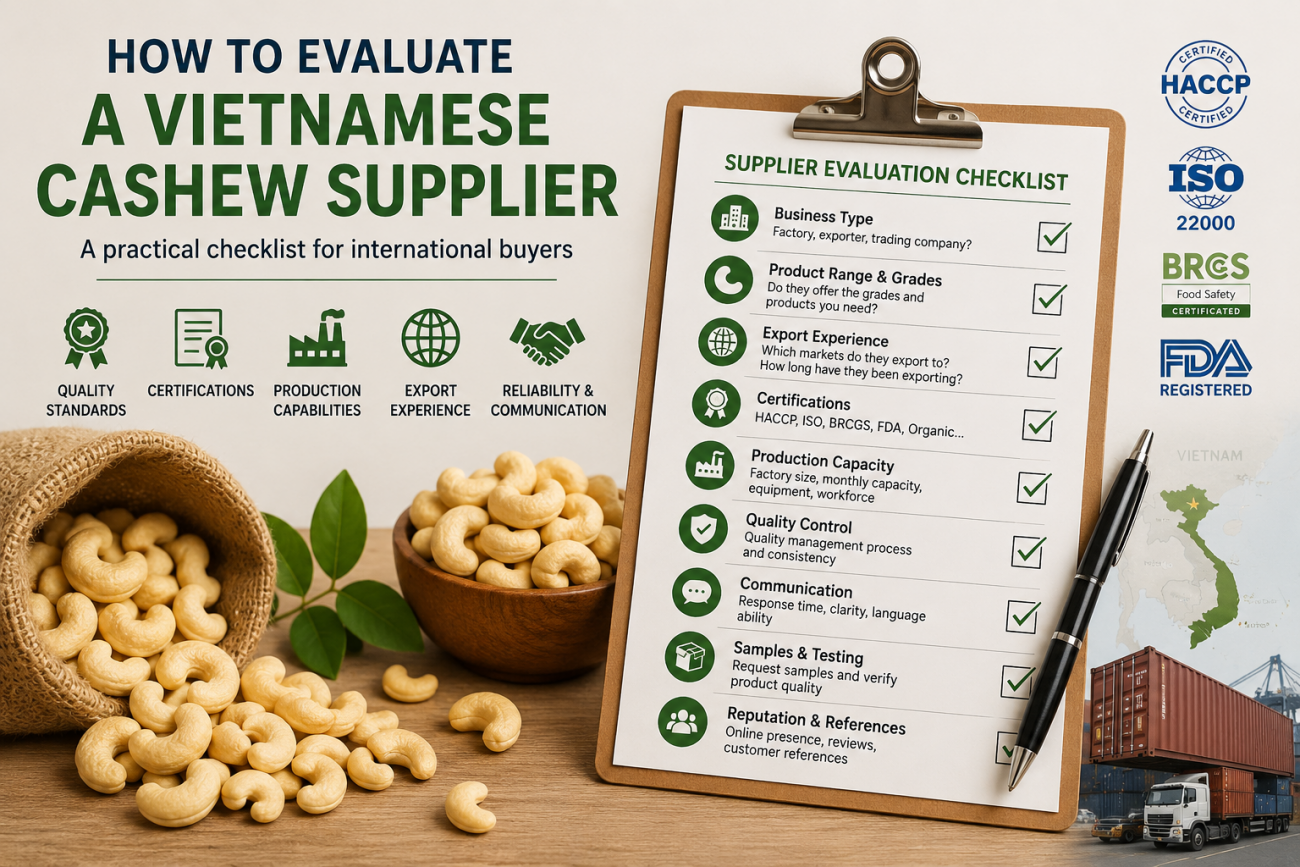
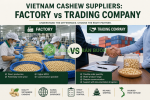
1. Understand the Supplier's Business Type
Not all suppliers operate in the same way.
A supplier may be:
- A cashew processing factory
- An exporter
- A trading company
- A broker or intermediary
Processing factories typically have direct control over production and quality management. Trading companies may offer more flexible sourcing options but often rely on third-party manufacturers.
Understanding the supplier's business model helps buyers assess production capabilities, pricing structure, and supply reliability.
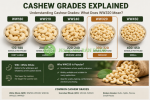
2. Review Product Range and Cashew Grades
Different suppliers specialize in different product categories.
Common products include:
- White whole cashew kernels (WW180, WW210, WW240, WW320, WW450)
- Roasted cashews
- Salted cashews
- Honey-coated cashews
- Organic cashew products
- Flavored cashew snacks
Buyers should verify whether the supplier regularly exports the specific grade or product required.
For example, a supplier focusing on premium snack products may not be the best choice for buyers seeking large volumes of industrial-grade kernels.
3. Check Export Experience
Export experience is often a strong indicator of supplier capability.
Useful questions include:
- Which countries does the supplier currently export to?
- How long has the company been exporting?
- Does the company have experience with your target market?
- Can they provide export documentation and compliance support?
Suppliers familiar with destination market requirements may be better prepared to handle regulatory and logistics challenges.
4. Verify Certifications and Quality Standards
Many international buyers require suppliers to meet specific quality and food safety standards.
Common certifications may include:
- HACCP
- ISO 22000
- BRCGS
- FDA registration
- Organic certifications (where applicable)
Certification requirements vary by market and product category. Buyers should request current documentation directly from suppliers.
5. Assess Production Capacity
A supplier may offer attractive pricing but lack the capacity to meet future demand.
Consider evaluating:
- Factory size
- Processing capacity
- Number of employees
- Available product lines
- Seasonal production fluctuations
Understanding production capabilities can help prevent supply disruptions during peak demand periods.
6. Evaluate Communication Quality
The supplier's responsiveness can reveal valuable information about business professionalism.
Key indicators include:
- Response speed
- Quality of communication
- Clarity of product information
- Ability to communicate in English
- Willingness to answer technical questions
Effective communication becomes especially important when dealing with international transactions and long-term business relationships.
7. Review Online Presence
A professional online presence does not guarantee supplier quality, but it can provide useful signals.
Buyers may review:
- Company website
- Product catalogs
- Export-related information
- Company registration details
- Trade show participation
- Business directories
Consistent and updated information across multiple channels can help improve confidence during the initial evaluation stage.
8. Request Product Samples
Before committing to large orders, buyers should evaluate product samples whenever possible.
Sample evaluation may include:
- Appearance
- Kernel size consistency
- Moisture content
- Flavor
- Packaging quality
- Product defects
Sampling helps verify whether products meet the required specifications and quality expectations.
9. Compare Multiple Suppliers
Relying on a single supplier during the evaluation stage may limit sourcing options.
Buyers are encouraged to compare multiple suppliers based on:
- Product quality
- Certifications
- Export experience
- Production capacity
- Communication quality
- Pricing
A comparative approach often provides a clearer understanding of market conditions and supplier capabilities.
Need Help Identifying Vietnamese Cashew Suppliers?
Evaluating suppliers can be time-consuming, especially for buyers who are new to the Vietnamese cashew industry.
Nongsanbanbuon.com is developing a supplier discovery and market intelligence platform focused on Vietnam's agricultural sector. We provide industry information, supplier research and sourcing insights to help buyers better understand potential suppliers and market opportunities.
If you are looking for Vietnamese cashew suppliers, you can explore our supplier resources and industry guides available on the platform.
For inquiries:
Email: hotrokhachhang@nongsanbanbuon.com
WhatsApp: +84 976 921 489
Final Thoughts
Vietnam offers a large and diverse cashew industry with suppliers ranging from small processors to large export-oriented manufacturers. While finding potential suppliers is relatively straightforward, selecting the right supplier requires careful evaluation.
By reviewing business type, product specialization, export experience, certifications, production capacity, and communication quality, buyers can make more informed sourcing decisions and reduce potential risks.
As Vietnam continues to strengthen its position in the global cashew market, supplier evaluation remains an essential first step for successful sourcing partnerships.
 You may also like:
- Vietnamese Cashew Nuts: Complete Guide to Vietnam’s Cashew Industry and Export Market (2026)
- Vietnam Cashew Nuts: Export Overview 2026
- Why Binh Phuoc Cashews Are Famous Worldwide
- What Does WW320 Cashew Mean? A Simple Guide to Cashew Grades
- Why Vietnamese Cashew Nuts Are Popular Worldwide
Bài viết gần đây